The greatest challenge of the day is: how to bring about a revolution of the heart, a revolution which has to start with each one of us?  —Dorothy Day 

A best practice that our team employs supplements our regular “business” meetings with additional “book club” conversations. Each year we select 2 or 3 different readings- sometimes books, sometimes articles- that we identify as helping to support our professional and personal growth. Especially as a remote team, I find this practice a unifying experience. This morning we wrapped up our final “book club” discussion of the year, and I share an excerpt below.

“We have to imagine communities where more attention is paid to openness and welcoming of those who come from outside than to go to the protection and defense of whose who are inside. Communities that are more concerns with building bridges than building walls.” Good idea, thanks to Brother Antonio Botana, FSC in MEL 58 (p. 91).

Also I am pleased to cut and paste one more pearl of wisdom from a weekly email from the Center for Action and Contemplation:

“Love may or may not provide a way through to a solution to our predicament, but it will provide a way forward in our predicament, one step into the unknown at a time. Even if we lose hope for a good outcome, we need not lose hope of being good people.”  
—Brian D. McLaren

Blessings on your week ahead!

Never underestimate the power of being seen. -Brené Brown

Today I started work on a retreat I am leading next month, and I recalled one of my favorite quotes on seeing and belonging that I plan to use for the retreat – see the below reflection from Ronald Rolheiser. I’m also happy to share a new Tiny Desk concert that motivated me today during some welcome time at my desk. Blessings on your week ahead!

Blessing As Seeing

To really see someone, especially someone who looks up to you, is to give that
person an important blessing. In a gaze of recognition, of understanding, in an
appreciative look, there is deep blessing. Often, it is not so important that we say
much to those for whom we are significant, but it is very important that we see
them. . . .


Good kings and queens see their people; good parents see their kids; good teachers
see their students; good pastors see their parishioners; good coaches see their
players; good executives see their employees; and in really good restaurants the
owner comes round to the tables and sees his or her customers, and the customers
are, without being able to explain why, grateful that the owner took the time and
pain to see them. We are blessed by being seen. . . .


. . . today the young are not being seen enough in this way. Our youth . . . are acting
out in all kinds of ways as a means of getting our attention. They want to, and they
need to, be seen by us – parents, adults, teachers, priests, leaders. They need our
blessing. They need to see, right in our eyes, the radical acceptance of their reality,
and they need to read in our eyes the words: “You are my beloved child; in you I am
well pleased.” Youth need our appreciative gaze; mostly they simply need our gaze.
One of the deepest hungers inside young people is the hunger for adult connection,
the desire to be recognized, seen, by a significant adult.


The surface often belies this. We can easily be fooled and put off here. Our young
people will, precisely, tend to give us the impression that they neither want nor
need us, that we should go away and leave them to their own world. Nothing could
be further from the truth. They desperately need, and badly want, the blessing that
comes from our gaze and presence. They need us to see them. In the end, more
than they want our words, they want our gaze.


— Ronald Rolheiser

We tend to complicate our faith, but when we, like the disciples, remember what matters, we return to our roots of love. -Valerie Schultz

This week I share a reflection and a poem that each came my way in recent days. I am thinking quite a bit about transitions at this time of year, as the schools I support wind down…and my home life winds up toward the summer ahead. Life is full and God is good.

Blessings on your week ahead!

Presence of God – Sr. Pat Kozak, CSJ

First, stay alert. Recognize that the power of God can make its appearance in unlikely times and places.

Second, remember that it is God who is ever “making all things new.”

Third, don’t miss the moment. Act on the grace as it comes to you.

What surprises might lie ahead for us today?

Dreams– By Langston Hughes

Hold fast to dreams

For if dreams die

Life is a broken-winged brid

That cannot fly.

Hold fast to dreams

For when dreams go

Life is a barren field

Frozen with snow.

The growth lies in the discomfort. -Dr. Nate Sessoms

This past week has felt like a rollercoaster of sorts. I was lucky enough to take in a couple Giants games (including a rare one with my daughter!), which I always enjoy. Since I was a child, attending live baseball games has relaxed me. As a fan of the sport, and now being blessed by attending games in a beautiful ballpark, I appreciate the experience even more as I get older. Later next month my hometown Phillies take on the Giants and I look forward to cheering them on with my whole family.

The challenges of the past week involve some ups and downs in the lives of the young whom I support. At home and in the settings of the schools I accompany, I marvel at the complexity of life that is presented to today’s youth. I am convinced that the strength of our relationships will sustain them – and us – on this rollercoaster of modern life.

The resources I share this week are a couple simple quotes along with a Tiny Desk concert from an excellent British musician, Sheku Kanneh-Mason. He recently released a new EP, “The Swan,” that I recommend, and this concert is a good one too. Blessings on your week ahead!

“Discernment creates a privileged holy partnership among us and with the Spirit who binds us together.” – Sr. Kathleen Hughes

“Jesus invites us into the Reign of God. It is by following the path of Jesus each day that we participate in the ongoing process of creating a new reality. God’s beloved community, where abundance, nourishment, and love are found in relationship with one another and in harmony with nature.” -Michael N. Okinczyz-Cruz


We must pray to God and ask God to give us the courage to love. -Saint Teresa of Calcutta

This week I am happy to share the below reflection from author Felicia Murrellin, who invites us to slow down and recognize God’s love in our lives. It’s a lofty aspiration yet it is one that is within reach. Blessings on your week ahead!

Experiencing Love

God is in our midst, a God who exults over us with joy, who quiets us in love, who rejoices over us with shouts of joy and gathers those who grieve (see Zephaniah 3:17–18).  

But how do we get to the place where this is the God we see, the God we encounter and know, the God who frames our imaginings when we think of God?  

Stillness, perhaps. Contemplative prayer, maybe.  

For me, Divine Love is unveiled through communion, connection, and acts of living that create openhearted wonder.  

Consistent engagement with spiritual practices often invites us into such spaciousness, creating access points for us to become more consciously aware of Divine Love’s kenotic expression in us and through us.  

To that end, all spiritual practices have this purpose—to allow us to touch the depths of our inner selves and to live a generous life of participation with Divine Love in absolute openheartedness; to move from what we know in our heads about God to living and moving and having our being in God; to be present in this life, to the world around us, and to Divine Love.  

What is true about God? God is Love (1 John 4:16).  

The experience of Love loving us allows us to feel and then to see. As Love invades our numbed-out parts, awakening us from cloudy misperception to Truth, we are invited to heal and to believe what Love believes about us, to trust in the benevolence and kind intentions of Love. Trust flourishes in the soil of Love. And there, our God image transforms.  

We don’t just decide to see God as loving; Love is who God is. To encounter Divine Love is to encounter our deepest self.  

We do not stand alone. We are meant to find each other. Kathy McGovern

I’m back on the road for work, traveling around and enjoying being part of community in diverse and varying settings. My kids are active and happy, and Brigid and I try to pace ourselves through to the end of the school year in early June. God is good.

I have recently begun walking our puppy Bingo in the mornings. This delightful return to a precious routine of mine (with our last dog) grounds me. As a 7 month old dog, Bingo still experiences the normal in exciting and profound ways. I find myself noticing the sounds of birds, pedestrians, and cars in refreshing ways. My discipline of walking to start my day is one of my most centering activities….and it is nice to have company again as I walk through my neighborhood each day.

I am happy to share this entertaining clip of a Matt Damon interview on a recent Stephen Colbert episode. Stephen’s final question if Matt asks: “Describe the rest of your life in five words.” Matt responded, “Family. Friends. Work. Service. Joy.” That about sums it up to me!

Blessings on your week ahead!

A city is not gauged by its length and width, but by the broadness of its vision and the height of its dreams. -Herb Caen

This morning I read the below article about San Francisco and thought to myself, finally, an optimistic view of the city I love! As I enter into this Easter weekend ahead, I find the tenor of this article speaks to the hope and optimism of the Resurrection that Christians celebrate soon. Enjoy the article and blessings on your week ahead!

I just moved to San Francisco. Yes, it has issues, but this city is still a dream

Since moving to San Francisco from Sacramento last month, I’ve walked 10,000 steps almost every day, attended incredible shows and performances on weekends, and gone for frequent runs along the Embarcadero with this-will-never-get-old views of the bay on one side and Coit Tower on the other. I’ve eaten bullfrog at a famed Sichuan restaurant in Chinatown and clinked after-work drinks with friends at the Top of the Mark, soaking in the 360-degree views of the city. 

Waiting in crushes of people to cross the street, I’ve had fascinating chats with strangers about everything from dating in the city to their favorite restaurants. I’ve boarded buses at 11:30 p.m., fearing they might be deserted and possibly dangerous, only to find them brimming with people and conversation. 

In other words, it doesn’t feel like I’ve moved to a city in decline. 

Yes, San Francisco is entrenched in one of the most challenging moments in its history. To hear many people tell it, the city is a ghost of its former self. And yet, even in its diminished state — record-high office vacancyshuttered storefronts, an increasingly devastating drug overdose death toll — the city still pulses with vitality. 

It’s an energy markedly different from other American cities I’ve lived in. Sacramento, where I spent the past four years, is undergoing a renaissance. Its population is rapidly increasing, largely due to Bay Area transplants, and its embrace of aggressive pro-housing policies is helping to revitalize its pandemic-battered downtown. Yet the city still feels suburban; it’s spread out and car-centric and fewer people are out and about, especially at night.

Philadelphia, where I went to college, is physically much larger than San Francisco, making its energy more diffuse. By contrast, dense and walkable San Francisco reminds me of a compressed spring always on the cusp of releasing its built-up energy.

I grew up in the East Bay, so I always knew San Francisco was beautiful. But living in the city, you’re constantly confronted by its beauty in new and surprising ways. The other day, not long before sunset, I went running along an unplanned route. Cresting a random hill, I stopped in my tracks as I unexpectedly entered a steeply terraced park — Ina Coolbrith Park, I later learned — that offered stunning views of Alcatraz and a glittering panorama of the city skyline. I stood in disbelief, catching my breath as orange and pink sunbeams melted together and slowly turned purple.  

I’ve been to Fisherman’s Wharf countless times, but only recently did I stumble upon the Musée Mécanique, a free museum filled with antique arcade games — some hundreds of years old — that are still in working condition and can be played for just a quarter or two. (Some are almost comically raunchy, including one that offers the chance to peep at “XXX images.”) The museum’s existence felt like a small miracle. At a time when stories of destruction and theft fill the news, how lovely it was to find proof of the public’s gentleness in the careful handling of the old machines, which are in near-pristine condition.  

And then there is the energy that emanates from the city’s people, best experienced by walking or taking public transit. I relied heavily on my car in Sacramento, and although I was reluctant to give it up when I moved to San Francisco — where else was I going to sing at the top of my lungs? — I’ve quickly come to realize the extent to which it sealed me off from my surroundings. There’s a sense of community, camaraderie and connectedness that comes from joining masses of people on sidewalks and streetcars: the faces, styles and personalities you see; the snippets of intriguing conversations you overhear; the little shops and restaurants you discover. 

It’s undeniable that this city is special. And yet San Francisco’s intrinsic allure — and the sense that it is too singular to fail — can also feed complacency.  

Why did the city need to sell itself to prospective residents and businesses, when its beauty and benefits were so evident? People were willing to pay nearly any price to be here, so what did it matter if convoluted bureaucratic processes made it absurdly difficult to do everything from obtaining a parking permit to opening a small business to building new housing? What did it matter if entire neighborhoods, such as the Tenderloin and the South of Market, were de-facto containment zones for the city’s homelessness, mental health and drug overdose epidemics? 

Just being in San Francisco was worth it — until, for many, it wasn’t. 

Since the COVID pandemic changed the ways we live and work, city officials have put forth numerous ideas to fill empty storefronts and lure people back downtown, including opening college campusesrelaxing retail zoning requirementswaiving fees for new businesses and making it easier to convert office buildings into apartments. Most of these plans, however, are still in their infancy, and their ultimate impact remains unclear. 

Living here, I see the city’s challenges more clearly than ever. And yet I also sense a fierce hunger for togetherness. Why else, a few weekends ago, would tens of thousands of people, myself included, wait for hours in a line snaking around Union Square for the chance at a couple of free tulips?  

Yes, San Francisco is struggling. But the buzz of energy and potential here is impossible to miss. If this is truly San Francisco at its lowest, well, I can’t wait to see the highs to come. 

Reach Emily Hoeven: emily.hoeven@sfchronicle.com; Twitter: @emily_hoeven

March 28, 2024

To see the miracle in the ordinary is a more precious gift than prophecy. -Abraham Verghese

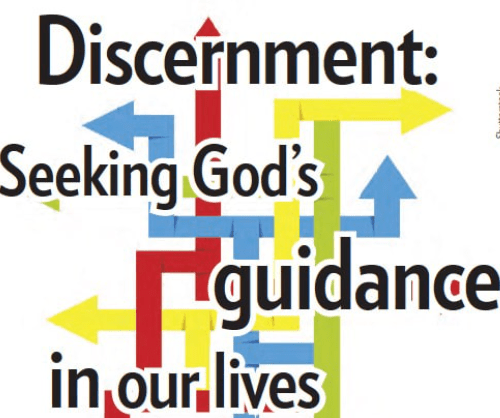
This week I’m sharing a reflection on prayer and discernment that grounded me in my thinking this week. Blessings on your week ahead!

By definition, discernment is all about prayer. If I am to discern well, I must have a prayer life. Having a prayer life involves more than simply praying every day. It is a core experience of my day-to-day life. Prayer does not necessarily take up a lot of my time, but it does take up a lot of my interior space, in terms of its impact on the whole of my life. I understand prayer as crucial to my well-being. When a companion sincerely asks, “How are you?” the state of my prayer life will be an important part of my answer. It is almost as if my prayer life were a person with whom I am in a loving relationship: I care for it, nurture it, and give my whole heart to it. My prayer life, in turn, nurtures me, grounds me, and gives me direction. Sad to say, I also neglect my prayer life. I get bored with it and tussle with it. Sometimes we just don’t get along. But I am always in relationship with it.

A prayer life doesn’t have to be mystical, beautiful, or inspirational. Even to seasoned pray‑ers this spiritual habit often seems quite ordinary and uneventful. What is crucial is the prayer’s importance to the one doing the praying. All that matters is that a person pray a little every day in order to grow closer to the God, who very dearly desires to grow closer to that person.

—Excerpted from God’s Voice Within by Mark E. Thibodeaux, SJ

To successfully build culture where people want to do more, leaders must invest in their people and abide by the laws of the harvest in doing so. -Salome Thomas-El

I headed into the office this morning for some head space, time in the car, and a focus upon just two timely projects. Plus my kids have off from school today so accomplishing the same projects in my home office would have presented its own challenges! While driving, I always appreciate the chance to think and gain perspective.

This week I am happy to share this video below as a resource for reflection. As the quote indicates, investing time into our own “harvesting” improves impact. As someone in the people business, witnessing the beauty in the images of this video- from Yosemite National Park, one of my favorite places on earth – grounds me in in the importance of appreciating the beauty of now. Blessings on your week ahead!

Much of hearing God’s voice begins with noticing. It begins with naming the reality that life is busy and full and that there are many distractions and voices in our lives. -Becky Eldredge

During quarantine, our kids introduced us to Powfu, a hip-hop/pop artist from Vancouver. This 20-something Canadian rapper portrays a positive message about life, relationships, and community. We attended his concert as a family earlier this week, and – other than feeling really old at an all ages show!- my wife and I thoroughly enjoyed sharing this music with our children and all the other young adults. I’ve embedded a clip from the concert below, where we learned that it turns out Isaiah (his real name) is Christian. Who knew.

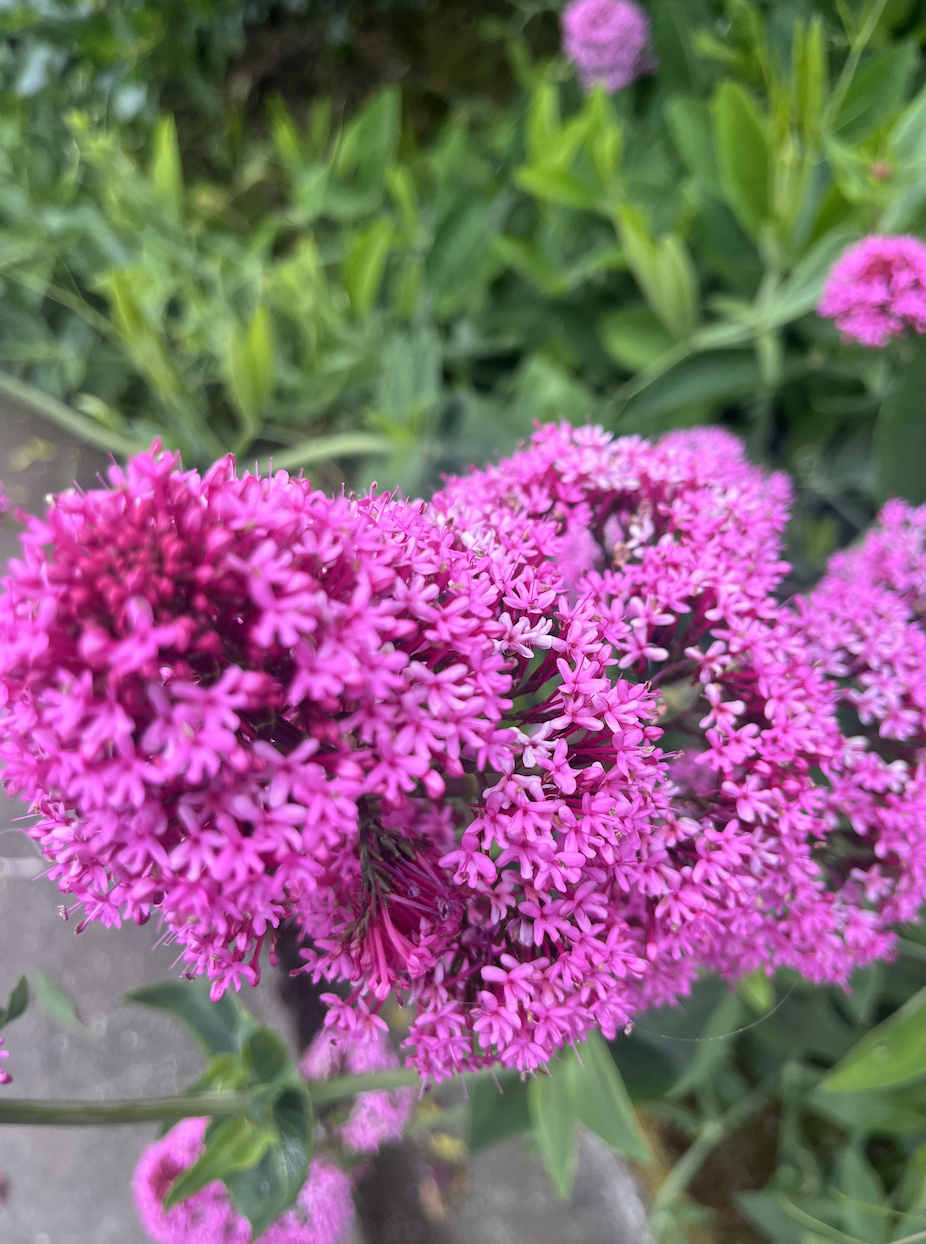
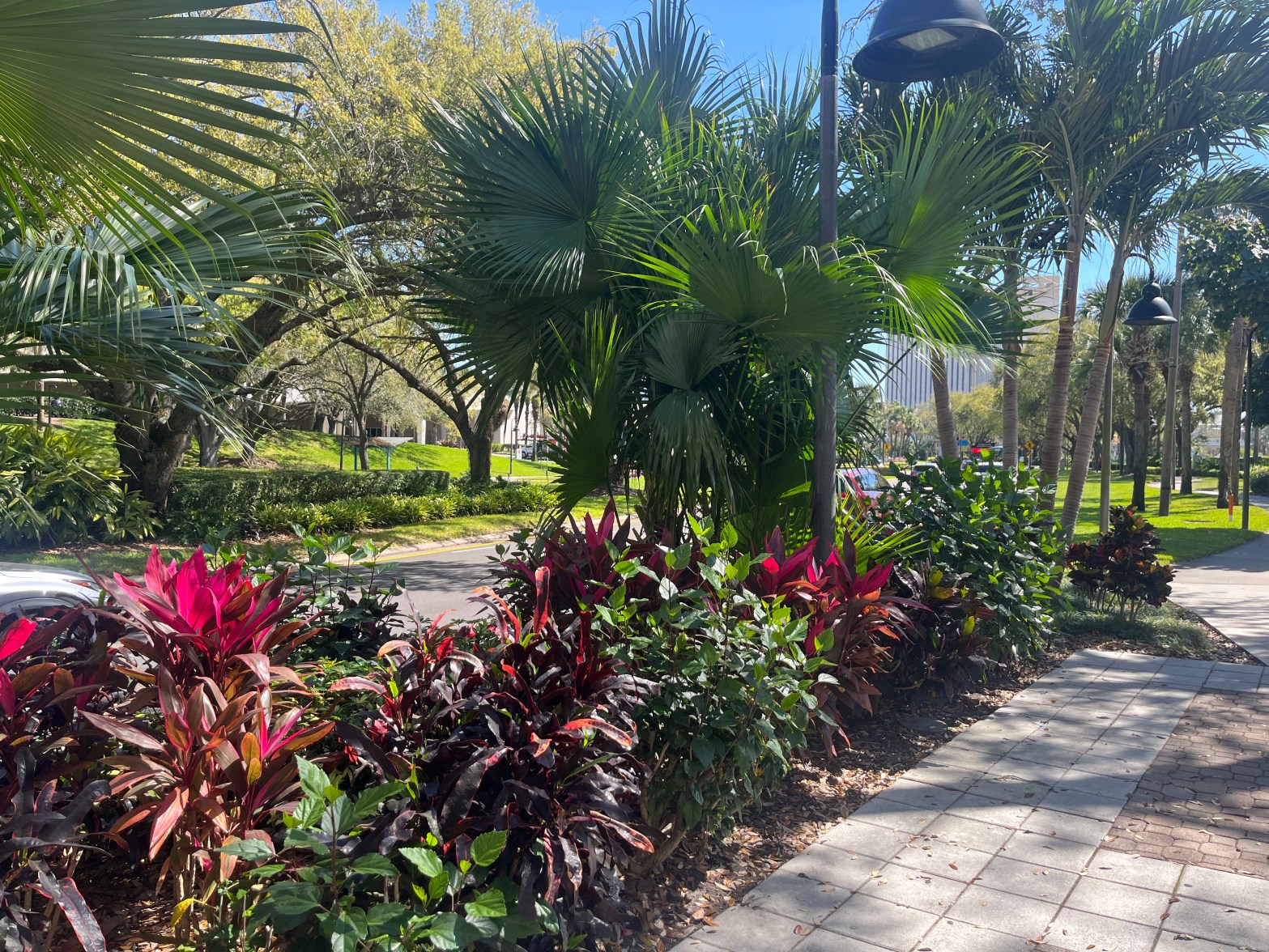
I am also pleased to share an excerpt from Ann Garrido’s new book (below). When I read it, I immediately thought of recent events in my rollercoaster of life as a spouse, parent, sibling/cousin/nephew, friend, and educator. Aren’t we all just doing the best we can??? I thought if this point often on my morning walks last week at a conference in Florida, where I am always struck buy the vibrancy of the plants (depicted).

Blessings on your week ahead!

From Ann Garrido’s Redeeming Power:

In our exercise of Christian leadership, we find ourselves seeking a healthy and holy middle ground…in short, we do the best we can. “One of the things I’ve come to realize,” a school principal told me, “is that every day requires something slightly different from me. Sometimes me being merciful with a particular family that has trespassd every boundary is a way I can help bring about greater justice in society as a whole, and sometimes me being just and drawing a strong boundary with a student is the greatest mercy I could do for them and their future. I’m always struggling to get it right.”

We all are.